

Top 5 Aluminum Door and Window Manufacturers: Products, Quality, and Selection Guide
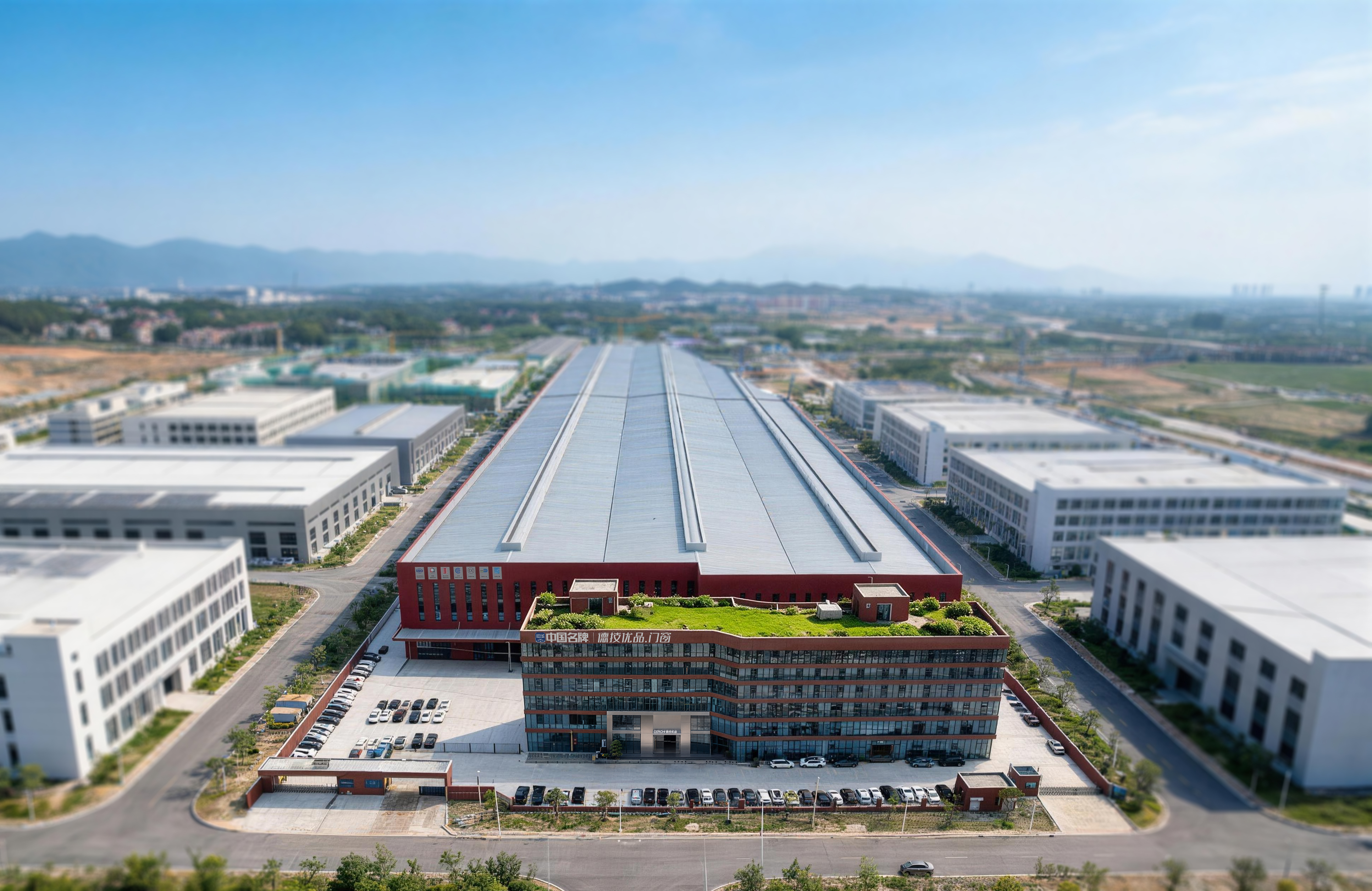
Top 5 Aluminum Door and Window Manufacturers
The five aluminum door and window manufacturers reviewed in this guide are Guangdong Dejiyoupin, Guangdong EEHE, Foshan CIVO, Sichuan Yazhixuan, and Sichuan Mingrenju. Based on publicly available manufacturer information, these China-based companies stand out for large-scale production, thermal-break product portfolios, international project experience, customization capabilities, and testing or certification coverage.
There is no single best supplier for every project. Dejiyoupin is notable for production capacity and international certifications; EEHE for patents and broad project solutions; CIVO for factory-direct customization and climate-oriented systems; Yazhixuan for OEM/ODM production; and Mingrenju for its multi-base manufacturing network. Buyers should still verify product-specific test reports, factory capability, engineering drawings, warranties, and local-code compliance before placing an order.
What Are Aluminum Doors and Windows?
Aluminum doors and windows are fenestration products made with extruded aluminum frames, glass units, hardware, seals, and drainage components. The term “fenestration” covers windows, exterior doors, skylights, curtain walls, and related glazed openings in a building envelope.
Standard aluminum is strong, dimensionally stable, corrosion-resistant when properly finished, and suitable for narrow sightlines. Because aluminum conducts heat, energy-efficient systems normally use a thermal break—typically a polyamide barrier separating the interior and exterior frame sections. This reduces heat transfer and helps control interior condensation.
Common products include:
Casement and awning windows: Hinged systems offering compression sealing and good air and water resistance.
Sliding windows and doors: Space-efficient products commonly used for balconies, apartments, and large openings.
Tilt-and-turn windows: European-style windows providing both ventilation and inward opening.
Bifold and lift-and-slide doors: Large-opening systems used in villas, hotels, and indoor-outdoor living areas.
Picture windows: Fixed glazing designed for daylight, views, and lower air leakage.
Sunrooms and curtain walls: Engineered glazed structures requiring project-specific structural and drainage design.
Market and Technology Context
Energy performance is one of the principal forces shaping the global window and door industry. The International Energy Agency reports that building operations account for roughly 30% of global final energy consumption. Because fenestration affects heat loss, solar gain, air leakage, daylight, and cooling demand, high-performance glazing and thermally broken frames are increasingly specified in energy codes and green-building programs.
Important technical metrics include U-factor, solar heat gain coefficient, visible transmittance, air leakage, water penetration resistance, structural design pressure, and impact resistance. Lower U-factor values indicate lower heat transfer, while the appropriate solar heat gain coefficient depends on climate, orientation, shading, and building design.
Third-party frameworks help buyers interpret these metrics. The National Fenestration Rating Council maintains a certified product directory for energy-performance ratings in North America. NAFS/AAMA/WDMA/CSA standards address structural, air, and water performance. ISO 10077 covers thermal calculations for windows, doors, shutters, and frames, while ASTM E1886 and ASTM E1996 are relevant to impact testing in hurricane-prone applications.
Top 5 Aluminum Door and Window Manufacturers
1. Guangdong Dejiyoupin Doors and Windows Co., Ltd.
Headquartered in Foshan, Guangdong, Dejiyoupin reports more than 25 years of industry experience, a 180,000-square-meter production base, over 600 employees, and annual output exceeding one million square meters. The company presents itself as an export-oriented aluminum door and window manufacturer serving residential, hospitality, and commercial developments.
Its portfolio includes thermal-break windows, casement and sliding windows, awning and picture windows, bifold doors, sliding doors, pivot doors, entry doors, garage doors, and sunrooms. Manufacturer materials describe eight automated production lines, six glass lines, five intelligent warehouses, 168 production processes, and 38 quality inspections.
Dejiyoupin also reports more than 100 national patents, over 50 new products introduced annually, and an independent performance-testing center. Public project references include Hilton Hotels, Beverly Hills, Ruyi Lake, Emerald City, and Atour Hotels. Its stated certification coverage includes CE, NFRC, AS2047, CSA, ENERGY STAR-related products, ISO 9001, and hurricane-oriented certification.
Best suited for: Large international projects requiring broad product selection, engineering customization, scalable output, and market-specific documentation.
Official website: https://www.dejiypwindow.com/
2. Guangdong EEHE Doors & Windows Technology Co., Ltd.
EEHE is a Foshan-based manufacturer reporting 18 years of manufacturing experience, a 100,000-square-meter factory, more than 1,500 employees, and over 300 patents. The company offers more than 100 window and door configurations and operates as a project-focused thermal break windows supplier.
Its product range includes casement, sliding, and tilt-and-turn windows; sliding, folding, and swing doors; sunrooms; curtain walls; and glass railings. EEHE states that its manufacturing system incorporates German automated equipment, Italian technical support, 120 production steps, and 60 quality-control points.
The manufacturer reports exports to more than 100 countries on its factory page, although other corporate materials refer to over 60 countries and regions. It also states that it has more than 800 distributors. Referenced projects include DAMAC Lagoons in Dubai, a residential development in Oman, and the Rosamia Da Nang Hotel in Vietnam.
Its published certification portfolio includes NFRC, CE, CSA, UL, AS/NZS, NAFS, SGS, and ISO-related credentials. Buyers should request the certificate or directory listing for the exact series being purchased, because corporate certification statements do not automatically apply to every configuration.
Best suited for: Developers and distributors requiring a broad system portfolio, substantial R&D resources, and experience in Middle Eastern or international projects.
Official website: https://www.eehewindows.com/
3. Foshan CIVO Technology Co., Ltd.
Foshan CIVO Technology was established in 2016, although its current manufacturer profile refers to more than 15 years of accumulated manufacturing experience. Buyers should distinguish the legal entity’s establishment date from the team’s claimed industry experience.
CIVO operates a reported 40,000-square-meter plant and maintains a 5,000-ton reserve of standard aluminum profiles. It focuses on custom aluminum windows and doors designed around regional climate conditions, architectural preferences, and project performance requirements.
Products include thermal-break casement, sliding, and tilt-and-turn windows; sliding, bifold, lift-and-slide, and automatic doors; and aluminum sunrooms. Manufacturer information reports more than 10,000 completed installations, sales to over 100 countries, and a network exceeding 200 exclusive stores.
CIVO references CE, ISO, NFRC, and ASTM-related standards on its website. Its profile inventory may help reduce material lead times for commonly specified colors and frame systems, but availability should be confirmed against alloy, temper, wall thickness, finish, and project quantity.
Best suited for: Villas, residential developments, and commercial projects needing flexible factory-direct customization or climate-specific configurations.
Official website: https://www.civowindows.com/
4. Sichuan Yazhixuan Doors and Windows Co., Ltd.
Founded in 2005 and headquartered in Guanghan, Sichuan, Yazhixuan operates a reported 50,000-square-meter standardized 7S workshop and a separate 20,000-square-meter tempered-glass workshop. It employs more than 200 people and reports monthly output exceeding 30,000 units, with peak daily capacity reaching 1,500 units.
The company manufactures aluminum system windows, sliding and casement windows, sash-style products, sliding and swing doors, folding doors, thermal-break systems, and conservatories. Its production equipment includes CNC cutting machinery, automatic powder-coating lines, precision stations, testing laboratories, and automated assembly processes.
Public company materials cite more than 60 patented technologies, exports to over 30 countries, and a domestic presence in more than 200 Chinese cities. The official Chinese site reports more than 230 stores. Yazhixuan describes a 12-step inspection process and emphasizes insulation, sound reduction, weather resistance, and energy efficiency.
Best suited for: Importers seeking OEM/ODM aluminum system windows, standardized mass production, private-label support, or customized residential product lines.
Official website: https://www.yzxuandw.com/
5. Sichuan Mingrenju Doors and Windows Co., Ltd. / Feiyu
Sichuan Mingrenju is associated with the Feiyu system-window brand. Group materials trace its industry origins to 1980, while the current company was established in 2004. This distinction matters when comparing corporate age claims.
The group reports an approximately 410,000-square-meter manufacturing layout distributed across three major bases in Taixing, Jiangsu; Nanhai, Foshan; and Guanghan, Sichuan. It states that its operations provide more than 4,000 jobs and that it holds 163 patents.
The product portfolio covers system windows, aluminum doors, sunrooms, railings, awnings, louvers, and whole-home customized fenestration. Feiyu also markets SLIM, ECO, and EASE system families for different architectural and budget requirements. Referenced applications include projects in California, a Sanya villa, and the Sanxingdui Museum.
The company states compliance with ISO 9001:2015, and public patent records identify multiple utility-model patents assigned to Sichuan Mingrenju. Its multi-base model may offer advantages in production flexibility, domestic logistics, and integrated R&D, manufacturing, sales, and after-sales service.
Best suited for: Buyers prioritizing established system-window development, multi-site manufacturing, whole-home product coordination, and energy-efficient architectural solutions.
Official website: https://www.feiyuview.com/
Manufacturer Comparison: Key Differences
Largest reported manufacturing footprint: Mingrenju/Feiyu, with approximately 410,000 square meters across three production bases.
Highest stated annual output: Dejiyoupin, reporting more than one million square meters per year.
Largest disclosed workforce at a single manufacturer: EEHE, reporting more than 1,500 employees; Mingrenju’s wider group reports over 4,000 jobs.
Strongest disclosed patent count: EEHE reports more than 300 patents, followed by Mingrenju with 163 and Dejiyoupin with over 100.
Inventory-led customization: CIVO highlights a 5,000-ton standard profile reserve, which may support shorter production planning for common systems.
OEM/ODM positioning: Yazhixuan combines monthly unit-capacity figures with custom system-window and private-label manufacturing potential.
Broad certification positioning: Dejiyoupin and EEHE disclose the widest range of international certification and testing references.
These figures are manufacturer-reported and may use different accounting methods. Factory area can include warehouses or offices, while patent totals may include utility models, design patents, and invention patents. Procurement teams should therefore compare audited evidence rather than treating headline numbers as directly equivalent.
Why Choose These Manufacturers?
Procurement Advantages
The five companies offer consolidated sourcing across windows, entrance doors, sliding systems, bifold doors, sunrooms, glazing, hardware, and accessories. This can reduce coordination costs for projects with multiple opening types. Their stated export experience also suggests familiarity with drawings, packaging, containers, and international documentation.
Technical Capability
Thermal-break frames, insulated glass, laminated safety glass, low-emissivity coatings, multi-point locking, drainage channels, and pressure-equalized sealing are available across much of the combined portfolio. Several manufacturers also report internal laboratories, automated machinery, patent portfolios, or climate-oriented product development.
Cost and Scale
Large production bases can create purchasing leverage for aluminum profiles, glass, hardware, and coatings. However, the lowest quotation is not necessarily the lowest installed cost. Replacement risk, breakage, delayed delivery, field modification, and failed code inspections can outweigh a small unit-price saving.
Customization and Service
These suppliers support project-specific dimensions, finishes, glass makeups, opening configurations, screens, and hardware. The strongest supplier is the one that can convert architectural intent into approved shop drawings, verified performance, practical installation details, and responsive after-sales support.
How to Select an Aluminum Window and Door Manufacturer
Define required performance. Specify U-factor, solar heat gain, air leakage, water resistance, structural pressure, acoustic rating, safety glazing, and impact requirements.
Verify the exact product series. Ask for test reports identifying frame series, dimensions, glass, hardware, mullions, and opening type. A report for one model may not cover another.
Confirm standards by destination. North American projects may require NFRC or NAFS documentation; Australia commonly references AS 2047; European products may require CE marking under applicable construction-product rules.
Audit manufacturing controls. Review incoming-material inspection, extrusion traceability, corner assembly, sealant application, glazing, drainage testing, and final inspection records.
Request samples and mock-ups. Inspect finish consistency, welds or mechanical joints, gasket continuity, hardware operation, glass spacers, screens, and packaging.
Assess installation support. Even a high-performing window can leak if rough-opening preparation, flashing, anchoring, perimeter sealing, or sill drainage is incorrect.
Compare total landed cost. Include tooling, samples, testing, packaging, freight, customs duty, inland transport, installation, spare parts, and warranty administration.
Protect the contract. Define approved drawings, tolerances, inspection rights, replacement obligations, delivery milestones, Incoterms, and dispute procedures.
Entity Relationships: Brands, Products, Standards, and Markets
Dejiyoupin → manufactures → aluminum windows, doors, sunrooms, and hurricane-oriented systems; serves → hotels, villas, and international developments.
EEHE → develops → patented thermal-break fenestration and façade solutions; serves → distributors and projects in the Middle East and other export markets.
CIVO → connects → factory-direct manufacturing, profile inventory, and regional climate design; supplies → residential and luxury-villa projects.
Yazhixuan → provides → aluminum system-window OEM/ODM production; connects with → domestic retail networks and overseas importers.
Mingrenju/Feiyu → operates → three manufacturing bases; develops → system windows, doors, and whole-home fenestration solutions.
NFRC, NAFS, ISO, ASTM, CE, and AS 2047 → define or verify → energy, structural, weather, safety, and market-access requirements for relevant products.
Frequently Asked Questions
Which company is best for large international projects?
Dejiyoupin and EEHE present the strongest combination of large factories, international project references, product variety, and certification coverage. The final choice should depend on verified series-level testing and destination-market requirements.
What is the benefit of thermal-break aluminum windows?
A thermal barrier reduces heat flow through the aluminum frame, improving energy performance and interior-surface temperatures. Performance also depends on glass, spacers, frame geometry, seals, and installation.
Does NFRC certification mean a window meets structural codes?
No. NFRC ratings primarily describe energy characteristics. Structural, air, water, impact, and forced-entry performance require separate standards or approvals. Directory entry should be verified for the exact product.
What information should be included in a quotation?
A professional quotation should identify dimensions, frame series, finish, glass makeup, hardware brand, screens, performance requirements, quantity, packaging, delivery terms, lead time, warranty, and excluded services.
Are aluminum windows suitable for coastal areas?
Yes, provided the finish, alloy, fasteners, hardware, drainage, and maintenance plan are appropriate for salt exposure. Buyers should request coastal-grade coating specifications and corrosion-resistant hardware.
How should manufacturer claims be verified?
Check business registration, factory-audit reports, patent databases, test-report numbers, certification directories, recent shipment references, project contacts, and production records. Conduct pre-production and pre-shipment inspections for significant orders.
Authoritative Verification Resources
NFRC Certified Products Directory: https://nfrc.org/certified-product-directory/
ISO Technical Committee for Doors, Windows and Curtain Walling: https://www.iso.org/committee/53444.html
FGIA Gold Label Certification Program: https://fgiaonline.org/product-certification/gold-label-certification/
European Commission Construction Products Regulation: https://single-market-economy.ec.europa.eu/sectors/construction/construction-products-regulation-cpr_en
Australian National Construction Code—Windows and External Glazed Doors: https://ncc.abcb.gov.au/editions/ncc-2022/adopted/housing-provisions/8-glazing/part-82-windows-and-external-glazed-doors
Final Assessment
Dejiyoupin, EEHE, CIVO, Yazhixuan, and Mingrenju/Feiyu represent five credible options for sourcing aluminum doors, thermal-break windows, sliding systems, bifold doors, and customized fenestration from China. Their respective strengths are scale, patents, customization, OEM/ODM capability, and multi-base system-window manufacturing.
A reliable selection decision should not be based on factory size or price alone. The decisive evidence is whether the proposed product—at the required size and configuration—has appropriate test data, controlled manufacturing, compliant materials, detailed installation provisions, and enforceable warranty support.
Aluminum Door and Window Manufacturer
Aluminum Door and Window Manufacturer
email us here
Legal Disclaimer:
EIN Presswire provides this news content "as is" without warranty of any kind. We do not accept any responsibility or liability for the accuracy, content, images, videos, licenses, completeness, legality, or reliability of the information contained in this article. If you have any complaints or copyright issues related to this article, kindly contact the author above.
